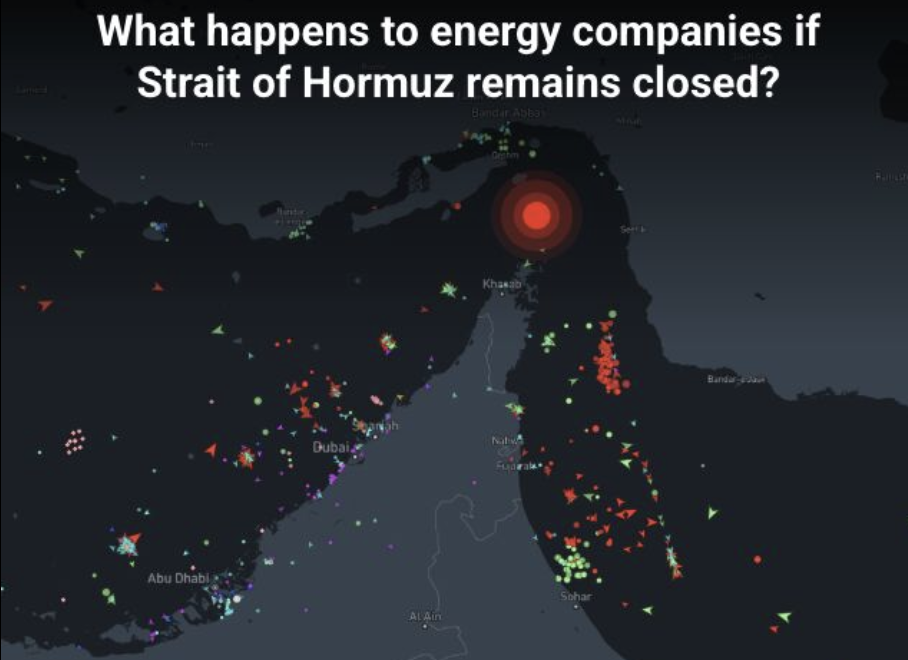
MIDDLE EAST UPDATE:
What AIR Platforms's scenario analysis shows
The Iranian conflict poses grave threats to the Middle East and to the global economy, but as in any such situation, among the figurative rubble credit investors can find entities that will do well out of a prolonged war.
US-focused energy exploration and production firms are one such example; their top lines are boosted by higher energy prices, and their production assets are located far from the fighting. But to accurately assess the risk and opportunities at the firm level, creditors need to consider a range of scenarios as well as second order effects
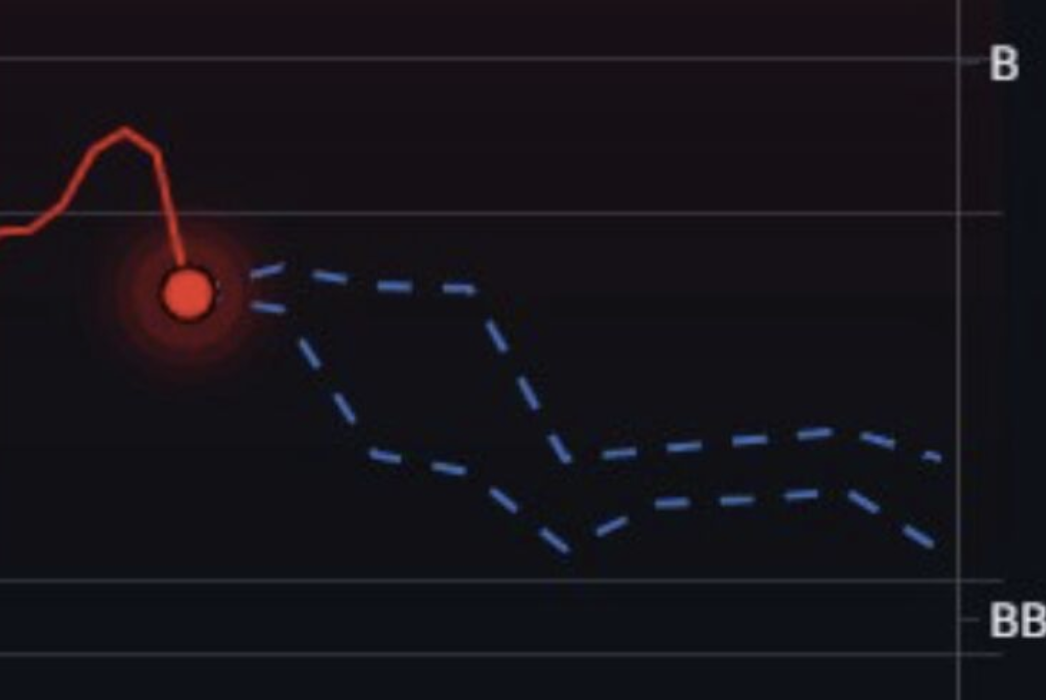
To model the impact of a prolonged conflict, we asked AIR’s AI Credit Agent to simulate the effects of a one-year closure of the Strait of Hormuz on U.S. E&P companies’ risk scores. California Resources Corporation provides a good example of how things might play out. The Agent generated two, two-year forecasts for CRC’s Score, which is a measure of credit risk. One is based on oil prices rising by $20/bbl and the other on an increase of $40/bbl (both for the next 12 months). The financial impacts of these two scenarios are positive, of course, with the company’s AIR Risk Score, as mapped to a rating scale, improving from the B+ equivalent level to BB- or BB (the forecasts are shown on the graph as downward sloping blue dotted lines).
The improvements are more modest than some might expect, given the operating leverage inherent to E&P companies, but the Score’s upside is constrained by the assumption that the majority of CRC’s energy sales are on a hedged basis. The Agent’s analysis further assumes that stresses in the oil patch will lead to higher operating and equipment costs, cutting into margins. Offsetting these headwinds, the analysis also assumes that the firm’s greater cash flow generation will allow it to pay down debt - always a credit positive.


.png)