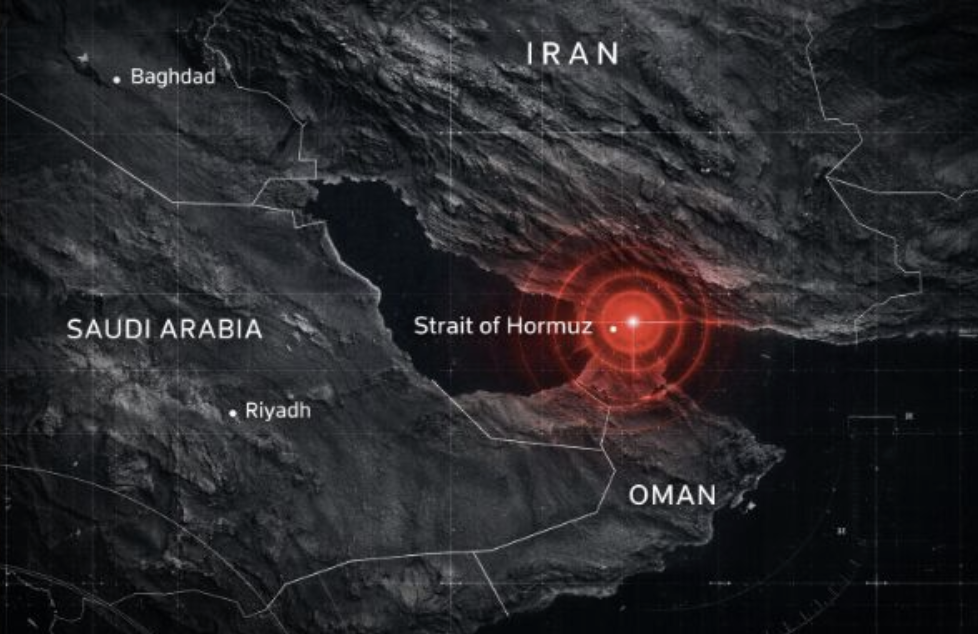
A prolonged closure of the Strait of Hormuz will have a positive impact on many US E&P companies.
Strait of Hormuz Shock
- Oil surge lifts E&P credit outlook
- Small producers benefit most
- Majors face downside risk
The US-led attack on Iran has driven the price of oil (Brent Crude) north of $80 per barrel, with the prospect of more pain to come as Iran and its proxies have closed the Strait of Hormuz, through which a fifth of the world’s energy passes daily, and have launched strikes against energy infrastructure across the region. The resulting stresses have placed US energy companies, particularly in the exploration and production sector, under the spotlight.
Harnessing the power of its AI-powered credit intelligence platform, AIR has reviewed the impact of the conflict on 47 representative publicly traded E&P companies. We did so by assessing the impact of a one-year closure of the Strait of Hormuz on the entities’ creditworthiness, as measured by AIR’s entity level Risk Signals mapped to ratings-equivalent metrics. The scenario analysis shows that the impact for the pure E&P players is often positive; the number of single-C equivalent entities (mostly small E&P players) has fallen. This is mainly due to the expected sustained increase in oil prices, which will reduce their cost of goods sold and thus improve margins. Many also benefit from the location of their oil fields in the US. Our analysis also assumes that many of the companies will use their improved cash positions to pay down debt, which would further reduce their credit risk.
The outcome is less sunny for the major integrated companies, whose ratings-equivalent measures declined. Not only do they have production facilities in the conflict zone, but their non-E&P operations could suffer from high and volatile energy prices. Moreover, their high fixed costs and global operations leave them more heavily exposed to an economic downturn that could result from a widening conflict.
AIR’s intelligence signals detect a wide dispersion of outcomes for these majors, with most paths skewing to the downside. On a portfolio level the two effects pretty much cancel each other out, with the average rating improving from BB- to BB equivalent.


